
AI Content vs Human Content: Google 2026 Me Kis Content Ko Prefer Karta Hai?
AI Content vs Human Content ka debate 2026 me blogging aur SEO ke liye aur bhi important ho gaya hai. Aaj AI tools kuch seconds me article ka outline, introduction, headings aur complete draft tak generate kar sakte hain. Lekin iska matlab ye nahi hai ki har AI-generated article Google Search me automatically perform karega.
Dusri taraf, sirf human ne article likha hai iska matlab bhi ye nahi ki woh article automatically high-quality ya search-friendly hoga.
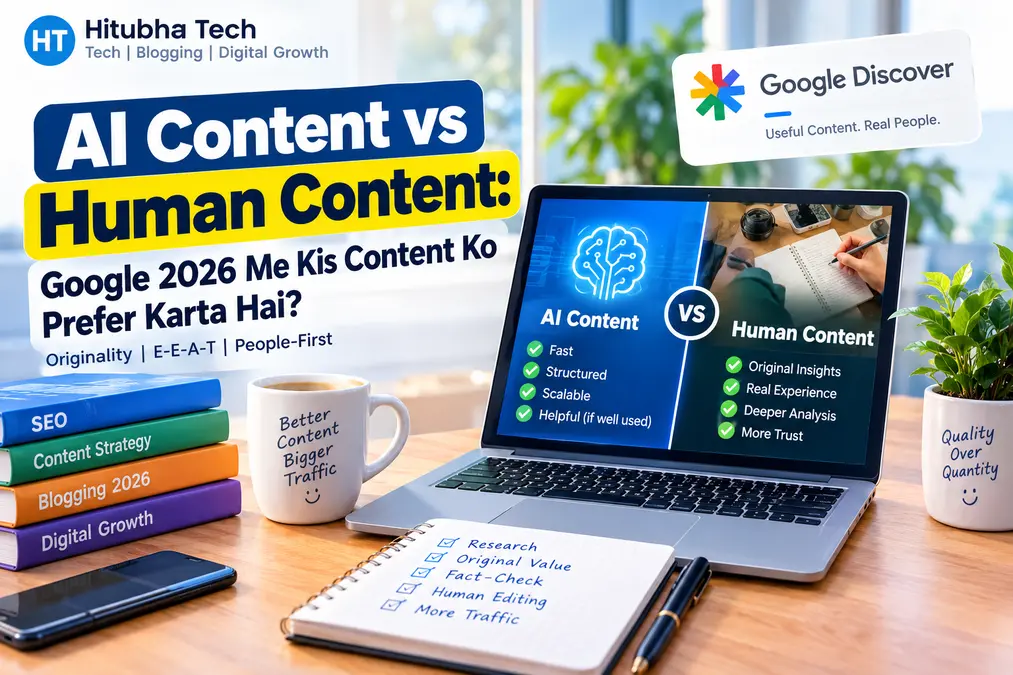
Actual question ye hai: Google 2026 me content ko kis basis par evaluate karta hai? Kya AI-generated content ko Google reject karta hai? Kya human-written content ko automatically preference milti hai? Aur agar blogger AI ka use karta hai, to useful aur trustworthy content kaise create kare?
Is detailed guide me hum AI Content vs Human Content ko practical SEO perspective se samjhenge aur dekhenge ki AI ko blogging workflow me kis tarah use kiya ja sakta hai bina content ko generic ya low-value banaye.
AI Content vs Human Content: Sabse Pehle Basic Difference Samjhein
AI Content aur Human Content ko samajhne ke liye pehle ye clear karna zaroori hai ki dono terms ka actual meaning kya hai.
AI Content Kya Hota Hai?
AI content woh content hai jisme generative AI tools ka use text generate, rewrite, summarize, structure ya expand karne ke liye kiya jata hai.
Example ke liye blogger AI se ye kaam karwa sakta hai:
- Blog topic ideas generate karna
- Search intent ke according outline banana
- Introduction ka first draft banana
- Heading structure suggest karna
- Complex information ko simple language me explain karna
- Article ko grammar aur readability ke liye improve karna
- FAQ questions suggest karna
- Meta description ke ideas banana
Iska matlab ye nahi ki poora article automatically publish karna hi AI content ka ekmatra model hai.
Ek blogger AI ko assistant ki tarah use kar sakta hai aur final article me apni research, examples, observations, screenshots, testing aur editing add kar sakta hai.
Human Content Kya Hota Hai?
Human content ka matlab broadly aisa content hai jisme human author ka knowledge, research, judgement, experience ya editorial contribution clearly present ho.
For example, agar koi tech blogger kisi mobile app ko khud install karta hai, features test karta hai, screenshots leta hai, limitations note karta hai aur phir apne observations ke basis par article likhta hai, to us article me first-hand contribution ho sakta hai.
Human-written content bhi low-quality ho sakta hai agar woh sirf doosre websites ki information ko rewrite karta ho.
Isi wajah se “Human = Good” aur “AI = Bad” ek accurate SEO formula nahi hai.
Google 2026 Me Actually Kis Type Ke Content Par Focus Karta Hai?
Google Search Central ki current guidance ke according ranking systems ka goal helpful aur reliable information ko prioritize karna hai jo primarily people ke benefit ke liye create ki gayi ho, na ki sirf search rankings manipulate karne ke liye.
Google ki people-first content guidance original information, research, analysis, completeness, useful insights, clear authorship aur first-hand expertise jaise factors par self-evaluation karne ko encourage karti hai.
Isliye 2026 me blogger ke liye better question ye nahi hona chahiye:
“Kya Google AI content ko rank karega?”
Better question hona chahiye:
“Kya mere article me reader ke liye enough original aur useful value hai?”
👉🏻Googlebook 2026: Google Ka Premium Android Laptop Kya Hai? Jaane Price, Features Aur Future
👉🏻Android 17 Ka Ye Feature Bahut Useful Hai, Lekin Zyadatar Users Isse Jaante Nahi
👉🏻New Gadgets 2026: AI, Foldable Phones, Smartwatches Aur Earbuds Ka Naya Era
AI Content Ko Google Automatically Reject Karta Hai?
Nahi.
Google ki published guidance ke mutabik AI ya automation ka use automatically spam nahi hai. AI ka use helpful content create karne ke liye kiya ja sakta hai.
Lekin ek important difference hai.
Agar AI ka use research, brainstorming, editing, structure ya drafting ke liye ho aur final content genuinely useful ho, to situation alag hai.
Dusri taraf agar koi website hundreds ya thousands pages sirf search traffic manipulate karne ke purpose se generate karti hai aur un pages me users ke liye meaningful additional value nahi hoti, to Google ise scaled content abuse ke context me dekh sakta hai.
Isliye problem sirf AI tool nahi hai. Problem content ka purpose, quality, originality aur scale ho sakta hai.
AI Content vs Human Content: Google Ke Perspective Se Comparison
| Factor | AI-Only Approach | Human-Led Approach |
|---|---|---|
| Research | AI summary par depend kar sakta hai | Sources aur actual research add ki ja sakti hai |
| Originality | Generic ho sakti hai | Author ka perspective add ho sakta hai |
| First-hand Experience | Naturally limited | Testing aur observations add kiye ja sakte hain |
| Speed | Bahut fast | Generally slower |
| Editing | Human review ki zarurat ho sakti hai | Author judgement directly available |
| Scalability | High | Limited by time/resources |
| Trust | Quality par depend karta hai | Author expertise aur evidence se strengthen ho sakta hai |
Google Ke Liye “AI vs Human” Se Zyada Important Kya Hai?
AI Content vs Human Content ko compare karte waqt kuch core quality questions zyada important ho jate hain.
1. Kya Content Original Value Add Karta Hai?
Agar article internet par already available information ko sirf different words me repeat karta hai, to sirf wording change karne se content automatically valuable nahi ban jata.
Original value ka matlab ho sakta hai:
- Author ke actual observations
- Original screenshots
- Product ya app testing
- Step-by-step demonstration
- Unique examples
- Comparison based on documented features
- Original analysis
- Reader ke specific problem ka practical solution
For example, “Best AI Writing Tools” par generic list banana easy hai.
Lekin agar article me author har tool ko test karta hai, writing quality compare karta hai, free limitations explain karta hai, Hindi/Hinglish output ka example deta hai aur batata hai ki kis use case me kaunsa tool practical hai, to article me additional value create ho sakti hai.
2. Kya Article Reader Ka Actual Problem Solve Karta Hai?
Ek article technically 2500 words ka ho sakta hai aur phir bhi reader ko answer na mile.
Dusri taraf 1200 words ka article kisi specific problem ko clearly solve kar sakta hai.
Isliye article ko sirf word count se evaluate nahi karna chahiye.
Google ki guidance me bhi koi preferred word count nahi diya gaya hai. Content ki length topic aur audience ki need ke according honi chahiye.
3. Kya Article Me First-Hand Experience Hai?
First-hand experience har topic ke liye possible nahi hota, lekin jahan possible ho wahan ye content ko substantially useful bana sakta hai.
Tech blogging me first-hand experience ke examples:
- App ko khud use karna
- Website feature ko test karna
- Hosting dashboard ke screenshots lena
- AI tool ke actual output ko compare karna
- Mobile settings ko practically check karna
- Software ke free aur paid versions ko test karna
Ek important rule: Jo test nahi kiya hai usko personal experience ke roop me present nahi karna chahiye.
4. Kya Information Fact-Checked Hai?
AI tools kabhi-kabhi outdated ya incorrect information generate kar sakte hain. Technology articles me ye problem particularly important hai kyunki apps, pricing, features, policies aur software versions frequently change hote hain.
Isliye final article publish karne se pehle important claims verify karna useful hai.
AI Content Ki Sabse Badi Problem: Generic Information
AI se article generate karna easy hai. Isi wajah se ek problem bhi create hoti hai: generic content.
Generic content me aksar:
- same introduction
- same definitions
- same benefits
- same generic tips
- same conclusion
- same FAQ questions
repeat hote rehte hain.
Reader ko agar 10 websites par almost same answer mil raha hai, to ek blogger ko apne article me kuch additional reason dena hoga ki reader us page ko kyun padhe.
AI Se Generic Article Ko Useful Article Kaise Banayein?
Iske liye ek simple transformation model use kiya ja sakta hai:
AI Draft → Human Research → Original Value → Fact Check → Human Editing → Final Article
AI ko final author samajhne ke bajay writing assistant samajhna is workflow ko improve kar sakta hai.
Step 1: AI Se Sirf Topic Nahi, Reader Problem Identify Karein
Example:
Weak topic: AI Tools for Bloggers
Better question: “New blogger AI tools ka use karke article banata hai, lekin content generic ho jata hai. Is problem ko kaise solve kare?”
Second approach me reader ki actual problem clear hai.
Step 2: Search Intent Samjhein
Search intent ka matlab hai user actually kya achieve karna chahta hai.
Agar koi search karta hai:
“AI Content vs Human Content”
to woh sirf definition nahi chahta ho sakta. User ye bhi samajhna chahta hai:
- Google AI content ko allow karta hai ya nahi?
- AI content rank kar sakta hai?
- Human content better hai?
- AI use karne ka safe workflow kya hai?
- Google ko quality content me kya important lagta hai?
- AI-generated content me kya mistakes avoid karni chahiye?
Isi intent ko cover karne se article zyada complete ban sakta hai.
AI Content vs Human Content: Sirf Writing Style Ka Difference Nahi
Bahut log AI content aur human content ka difference sirf language ke basis par dekhte hain.
Lekin actual difference workflow me hota hai.
Ek human author bhi AI jaisa generic article likh sakta hai agar woh sirf doosri websites ko rewrite karta rahe.
Ek AI-assisted author bhi genuinely useful article create kar sakta hai agar woh AI ke draft ke upar original research, testing, evidence, examples aur editorial judgement add kare.
Isi liye 2026 me blogging ka practical model “AI vs Human” se zyada “AI + Human” ho sakta hai.
AI + Human Content Model Kya Hai?
AI + Human model me AI repetitive aur time-consuming tasks me help karta hai, jabki human author important decisions aur quality control handle karta hai.
| Task | AI Ki Help | Human Role |
|---|---|---|
| Topic Research | Ideas aur questions | Final topic selection |
| Outline | Structure suggest karna | Useful sections select karna |
| Draft | First draft | Rewrite aur improve |
| Facts | Potential information | Verification |
| Examples | Example ideas | Realistic examples |
| Final Quality | Grammar/readability support | Final judgement |
Ye approach AI ki speed aur human judgement dono ko combine karta hai.
AI-Only Content Kaun Si Situations Me Weak Ho Sakta Hai?
AI-only content ka matlab yahan aisa article hai jisme AI ne majority content generate kiya aur publish karne se pehle meaningful human research, fact-checking ya original contribution bahut kam hui.
Aise workflow me kuch common problems aa sakti hain.
1. Repetitive Information
AI common topics par commonly available information ko logically arrange kar sakta hai, lekin agar author additional research nahi karta to final article internet par available information se bahut different nahi lagega.
2. Generic Examples
AI examples de sakta hai, lekin practical examples ko author ke specific audience aur context ke according customize karna important hai.
3. Outdated Information
Software features, pricing, app availability aur Google policies change ho sakti hain. Isliye important current claims ko publish karne se pehle verify karna chahiye.
4. Overconfident Statements
AI kabhi-kabhi uncertain information ko confident language me present kar sakta hai.
Example:
Risky: “Ye technique Google ranking ko definitely improve karegi.”
Better: “Ye technique content ko clearer aur more useful banane me help kar sakti hai, lekin Google rankings ki guarantee nahi hoti.”
5. Fake First-Hand Experience
Ye particularly important hai.
Agar author ne kisi product, app, hosting service ya AI tool ko personally test nahi kiya hai, to article me “maine personally test kiya” jaise statements nahi hone chahiye.
Trust build karne ke liye honest limitation batana fabricated experience se better hai.
Human-Written Content Bhi Automatically High Quality Nahi Hota
AI Content vs Human Content discussion ka doosra important side ye hai ki human-written content ko automatically superior assume nahi karna chahiye.
Ek human blogger bhi:
- Doosri websites ka content rewrite kar sakta hai
- Keyword stuffing kar sakta hai
- Unsupported claims kar sakta hai
- Clickbait title use kar sakta hai
- Reader ke actual question ko miss kar sakta hai
- Outdated information publish kar sakta hai
- Sirf word count badhane ke liye unnecessary paragraphs add kar sakta hai
Isliye content quality ka final judgement author ke naam se nahi, content ki usefulness aur reliability se related hona chahiye.
Google Ke “People-First” Approach Ko Simple Language Me Samjhein
People-first content ka simple meaning hai: article ko primarily real readers ke liye create karna, na ki sirf search engine ko impress karne ke liye.
Article publish karne se pehle ye questions pooch sakte hain:
- Kya meri intended audience ko ye article genuinely useful lagega?
- Kya article reader ke main question ka complete answer deta hai?
- Kya maine kuch original add kiya hai?
- Kya information reliable hai?
- Kya important claims verify kiye gaye hain?
- Kya author clearly identified hai?
- Kya article unnecessary repetition se free hai?
- Kya reader ko article padhne ke baad dobara same question search karne ki zarurat padegi?
Agar in questions ke answers strong hain, to content ka foundation better hota hai.
“Who, How, Why” Framework 2026 Me Kyun Useful Hai?
Google ki current people-first guidance content ko Who, How aur Why ke perspective se evaluate karne ka framework suggest karti hai.
Who — Content Kisne Banaya?
Reader ko clear hona chahiye ki article kis author ne create kiya hai.
Tech blog ke liye useful elements ho sakte hain:
- Author name
- Author bio
- Author page
- Relevant experience
- Clear editorial responsibility
Author information ko accurate hona chahiye. Sirf trust create karne ke liye fake credentials add nahi karne chahiye.
How — Content Kaise Create Hua?
2026 me AI-assisted content ke context me “How” aur bhi interesting ho gaya hai.
Google ki guidance ke according readers ke liye ye samajhna useful ho sakta hai ki content kaise produce hua, especially jab automation ya AI ka substantial role ho.
Har article me lengthy AI disclosure mandatory format me dena zaroori nahi samjha jana chahiye. Lekin jahan reader naturally ye question pooch sakta hai ki content kaise create hua, wahan transparent explanation trust improve kar sakti hai.
Why — Article Banane Ka Purpose Kya Hai?
Ye sabse important questions me se ek hai.
Agar article ka primary purpose reader ko useful information dena hai, to people-first approach ke saath alignment better hota hai.
Agar article ka main purpose sirf search traffic manipulate karna ho, to quality problems create ho sakti hain.
AI Content Me Human Value Add Karne Ke 10 Practical Ways
1. Original Screenshots Add Karein
Agar aap kisi app, website ya tool ke baare me article likh rahe hain aur aapne uska interface practically dekha hai, to relevant screenshots reader ko actual context de sakte hain.
2. Actual Testing Karein
Possible ho to tool ya feature ko khud test karein.
For example, “AI image generator kaise use karein” article me sirf generic steps likhne ke bajay actual workflow demonstrate kiya ja sakta hai.
3. Apne Examples Use Karein
Generic examples ke bajay target audience ke realistic examples use karein.
Hitubha Tech jaise technology blog ke liye examples blogging, AI tools, WordPress, mobile apps, gadgets aur digital workflows ke around ho sakte hain.
4. Limitations Clearly Batayein
Har tool perfect nahi hota.
Article me limitations explain karna trust improve kar sakta hai.
5. Alternatives Explain Karein
Reader ko sirf ek option batane ke bajay relevant alternatives aur unke use cases explain kiye ja sakte hain.
6. Before/After Example Dein
AI-generated generic paragraph ko human-edited useful version ke saath compare karna reader ko practical difference samjha sakta hai.
7. Data Ya Evidence Use Karein
Jahan relevant ho, official documentation, product specifications, Search Console data ya verified sources ka reference useful ho sakta hai.
8. Clear Editorial Judgement Add Karein
AI multiple possibilities suggest kar sakta hai. Final recommendation ya interpretation author ko evidence aur context ke basis par decide karni chahiye.
9. Outdated Sections Remove Karein
Content upgrade ka matlab sirf naye paragraphs add karna nahi hai.
Old, repetitive ya outdated information remove karna bhi important hai.
10. Reader Ke Next Question Ka Answer Dein
Article ka main question solve hone ke baad reader naturally kya poochega?
Us question ka useful answer article me add karne se content zyada complete ho sakta hai.
👉🏻AI Overviews & AI Mode 2026:How Bloggers Can Get More Traffic From AI Overviews & AI Mode
👉🏻Gemini 3.8 Live Kya Hai? AI Voice Chat Me Kya Badalne Wala Hai
👉🏻Gaming Laptop vs Normal Laptop: Kya Gaming Laptop Lena Worth It Hai?
AI Content Ko Human-Like Banane Se Zyada Important Hai Useful Banana
Bloggers aksar AI content ko “human-like” banane par focus karte hain.
Lekin objective sirf AI-generated text ko human jaisa sound karwana nahi hona chahiye.
Better objective hai:
AI ke draft ko genuinely useful editorial content me transform karna.
Is difference ko example se samjhein.
Generic AI Version
“AI tools bloggers ke liye bahut useful hain. Ye content writing ko easy banate hain, time save karte hain aur productivity improve karte hain. Bloggers AI ka use ideas, research aur writing ke liye kar sakte hain.”
More Useful Version
“AI ko complete article writer ke roop me use karne ke bajay blogging workflow ke specific stages me use karna zyada practical ho sakta hai. For example, topic research ke baad AI se outline banwayi ja sakti hai, lekin final article me author ko actual screenshots, tested steps, limitations aur apne audience ke context ko add karna chahiye. Isse AI ki speed maintain rehti hai aur article generic summary banne se bach sakta hai.”
Second version me sirf language difference nahi hai. Isme workflow aur practical judgement add hua hai.
AI Content + Original Research = Stronger Blogging Workflow
Ek practical workflow kuch is tarah ho sakta hai:
Topic
↓
Search Intent
↓
Research
↓
AI Outline
↓
AI-Assisted Draft
↓
Human Research + Testing
↓
Original Examples / Screenshots
↓
Fact Check
↓
Human Editing
↓
SEO Review
↓
Publish
↓
Search Console Monitoring
Is workflow me AI ek productivity layer ki tarah kaam karta hai, jabki final responsibility human editor ki hoti hai.
AI Content Me Keyword Stuffing Kyun Avoid Karna Chahiye?
AI tools ko keyword repeatedly use karne ke liye instruct karna tempting ho sakta hai.
Example:
“AI Content vs Human Content” ko har paragraph me baar-baar repeat karna.
Ye natural reading experience ko damage kar sakta hai.
Google ki spam policies keyword stuffing ko aisi practice ke roop me describe karti hain jahan keywords ko unnatural ya repetitive manner me use karke Search ko manipulate karne ki koshish hoti hai.
Isliye focus keyword ko natural locations par use karein:
- Title
- H1
- Introduction
- Relevant H2/H3
- Body content
- Conclusion
- Meta description
Lekin har paragraph me exact-match keyword repeat karna zaroori nahi hai.
Word Count: Kya Long Article Automatically Better Hai?
Nahi.
Long article tab useful hai jab additional length additional value provide kare.
Sirf 3000 words complete karne ke liye:
- same point ko repeat karna
- generic filler add karna
- unnecessary FAQ banana
- same conclusion baar-baar likhna
article ko better nahi banata.
Better approach hai ki article utna detailed ho jitna reader ke question ko properly solve karne ke liye required hai.
AI Content vs Human Content: Discover Ke Context Me Kya Samjhein?
Google Discover ke liye bhi sirf “AI-written” ya “human-written” label ko success ka shortcut nahi samajhna chahiye.
Discover-oriented content me timely relevance, useful information, strong presentation aur reader interest important ho sakte hain.
Agar AI-assisted article generic hai, to sirf AI use karne se Discover traffic ki guarantee nahi hoti.
Isi tarah human-written article bhi automatically Discover me appear karega, ye guarantee nahi hai.
Better approach hai ki content genuinely useful, original aur audience-focused ho.
👉🏻Gemini Notebook Ke New AI Features: Students Ke Liye Kya-Kya Badla?
👉🏻Web Hosting 2026: Website Ke Liye Hosting Kaise Choose Kare?
👉🏻AI Glasses 2026: Smart Glasses Mein AI Kaise Kaam Karta Hai Aur Ye Kya Kar Sakte Hain?
AI Content Me E-E-A-T Ko Practical Way Me Kaise Strengthen Karein?
E-E-A-T ka meaning hai:
- Experience – actual experience ya first-hand knowledge
- Expertise – topic ki understanding
- Authoritativeness – relevant authority signals
- Trustworthiness – reliable aur transparent information
Google ki documentation ke according E-E-A-T ek single ranking factor nahi hai. Ye quality ko understand karne wale broader concepts hain.
Tech blog ke liye practical implementation me author identity, accurate information, original screenshots, testing details, transparent limitations aur reliable sources useful ho sakte hain.
Hitubha Tech Ke Liye AI Content vs Human Content Ka Best Model
Hitubha Tech jaise technology blog ke liye practical approach pure AI-only publishing ke bajay AI-assisted human editorial workflow ho sakta hai.
Is model me AI speed aur productivity provide karta hai, jabki final article me human research, editing aur original value add hoti hai.
Step 1: Topic Select Karein
Topic ko sirf search volume dekhkar select karne ke bajay audience ke actual problem se connect karein.
Example:
Generic: “AI Tools 2026”
More specific: “Bloggers Ke Liye AI Tools 2026: Research, Writing Aur SEO Workflow Me Kaise Use Karein?”
Specific audience aur problem article ko focused banane me help kar sakti hai.
Step 2: Search Intent Identify Karein
Search query ke peeche user ka objective samjhein.
Informational, comparison, how-to aur problem-solving intent ko alag-alag consider karein.
Step 3: Reliable Research Karein
Current technology topics ke liye official documentation, product pages aur reliable sources check karna useful hai.
AI se information ka starting point mil sakta hai, lekin important claims ko independently verify karna better workflow hai.
Step 4: AI Se Outline Banwayein
AI ko complete article likhne ke bajay pehle outline banane ke liye use kiya ja sakta hai.
Example prompt:
“Is topic ke liye beginner-friendly outline banao. Generic definitions repeat mat karo. Reader ke actual problems, practical examples, limitations, mistakes aur step-by-step workflow ko priority do.”
Step 5: Human Research Add Karein
Outline ke baad author ko missing information identify karni chahiye.
Yahin se article generic AI draft se alag hona start hota hai.
Step 6: Original Material Add Karein
- Original screenshots
- Actual testing
- Realistic examples
- Personal observations where genuinely applicable
- Comparison tables
- Step-by-step instructions
- Useful limitations
Step 7: AI Draft Ko Edit Karein
AI ke generated paragraphs ko blindly publish na karein.
Har section ke liye check karein:
- Kya ye useful hai?
- Kya ye already article me kahi aur repeat ho raha hai?
- Kya claim verified hai?
- Kya language natural hai?
- Kya example relevant hai?
- Kya reader ko is paragraph se kuch actionable milega?
Step 8: SEO Review Karein
SEO ka purpose content ko search engines ke liye unnatural banana nahi hai.
Basic SEO review me title, heading structure, descriptive URL, internal links, image alt text, mobile readability aur crawlability check ki ja sakti hai.
Step 9: Final Human Review
Publish karne se pehle article ko ek normal reader ki tarah read karein.
Agar koi paragraph sirf word count badha raha hai, to use remove karna better hai.
Step 10: Publish Ke Baad Data Dekhein
Search Console ke through impressions, clicks, CTR aur queries ko monitor kiya ja sakta hai.
Performance data future content improvements ke liye useful feedback de sakta hai.
AI Content Publish Karne Se Pehle Complete Quality Checklist
☐ Article ka clear purpose hai
☐ Target audience clearly defined hai
☐ Search intent samjha gaya hai
☐ Content sirf doosri websites ka rewrite nahi hai
☐ Original information ya analysis add kiya gaya hai
☐ Important facts verify kiye gaye hain
☐ First-hand experience sirf wahi claim kiya gaya hai jo genuinely hua hai
☐ AI-generated generic paragraphs remove/edit kiye gaye hain
☐ Unnecessary repetition remove ki gayi hai
☐ Keyword natural manner me use hua hai
☐ Title accurately article ko describe karta hai
☐ H1 clear hai
☐ Headings reader ko navigate karne me help karti hain
☐ Internal links relevant hain
☐ Images relevant aur high-quality hain
☐ Mobile readability check ki gayi hai
☐ Author information clear hai
☐ Article publish karne ke baad performance monitor ki jayegi
AI Content Me Kaunsi Mistakes Avoid Karni Chahiye?
1. Ek Click Me 50 Articles Generate Karna
AI ki speed ka matlab ye nahi ki har din dozens of low-value pages publish karna useful strategy hai.
Google ki spam policy specifically large-scale content creation ko address karti hai jab pages primarily ranking manipulate karne ke liye banaye jate hain aur users ke liye little or no value provide karte hain.
2. Competitor Articles Ko Rewrite Karna
Competitor research useful ho sakti hai, lekin unka content sirf synonyms change karke reproduce karna original value create nahi karta.
3. Fake Statistics Add Karna
Agar AI koi percentage, survey result ya statistic provide kare, to source verify kiye bina publish nahi karna chahiye.
4. Fake Personal Experience
“Maine personally test kiya” tabhi likhein jab aapne genuinely test kiya ho.
5. Har Article Ko Same Template Me Publish Karna
Same intro, same conclusion, same FAQ aur same structure har topic par use karne se site ka content repetitive feel ho sakta hai.
6. Sirf SEO Ke Liye Topic Banana
Agar audience ke liye topic ka real purpose nahi hai aur article sirf keyword capture karne ke liye create kiya gaya hai, to long-term content quality weak ho sakti hai.
7. AI Ko Final Editor Samajhna
AI grammar aur structure improve kar sakta hai, lekin final editorial judgement author ki responsibility rehni chahiye.
AI Content vs Human Content: Ek Practical Example
Maan lijiye topic hai:
“Best AI Apps 2026”
Ek basic AI-generated article kya kar sakta hai?
- 10 apps ki list
- Har app ka short description
- Generic benefits
- Generic conclusion
Ek stronger editorial article kya add kar sakta hai?
- Apps ko actual use cases ke according divide karna
- Free vs paid limitations explain karna
- Android availability verify karna
- Hindi users ke liye practical usefulness batana
- Privacy considerations explain karna
- Actual screenshots add karna
- Specific workflow examples dena
- Kaunse users ke liye app useful nahi hai, ye bhi batana
Yahan difference “AI versus human writing speed” ka nahi, balki information depth aur original value ka hai.
Kya AI Content Future Me Blogging Ko Replace Kar Dega?
AI writing technology fast improve ho rahi hai, lekin blogging ka purpose sirf text generate karna nahi hai.
Readers ko information ke saath context, evidence, testing, interpretation aur trustworthy guidance bhi chahiye ho sakti hai.
AI routine writing tasks ko faster bana sakta hai, lekin kisi specific product ko genuinely test karna, unique observation develop karna, reader ke problem ko understand karna aur final editorial judgement dena abhi bhi content workflow ka important part ho sakta hai.
Isliye bloggers ke liye practical direction “AI ko ignore karna” ya “AI se sab kuch automate kar dena” ke beech ka model ho sakta hai.
AI ko productivity tool ke roop me use karein, replacement author ke roop me nahi.
Google 2026 Me Kis Content Ko Prefer Karta Hai? Final Answer
AI Content vs Human Content ka answer simple “human content” nahi hai.
Google ki current guidance ka broader message ye hai ki content helpful, reliable, people-first, original aur genuinely useful hona chahiye.
AI ka use allowed hai. Lekin AI-generated content ko bina meaningful value add kiye large scale par publish karna spam-policy risk create kar sakta hai.
Isliye 2026 ke liye ek practical formula ye ho sakta hai:
AI Speed
+
Human Research
+
Original Experience / Analysis
+
Fact Checking
+
Human Editing
+
People-First SEO
=
More Useful Content
Ye formula Google ranking ki guarantee nahi deta. Lekin ye content creation ko quality, usefulness aur originality ki direction me le ja sakta hai.
AI Content vs Human Content: Quick Summary
| Question | Practical Answer |
|---|---|
| Kya Google AI content ko ban karta hai? | Nahi, AI use automatically spam nahi hai. |
| Kya human-written content automatically rank karega? | Nahi. Human writing bhi low-value ho sakti hai. |
| Google ka focus kya hai? | Helpful, reliable, people-first aur original value. |
| AI ka best use kya hai? | Research assistance, outlining, drafting, editing aur productivity. |
| AI content ki biggest problem? | Generic, repetitive ya low-value content. |
| Human contribution kahan important hai? | Research, judgement, testing, originality, fact-checking aur editing. |
| Kya long article automatically better hai? | Nahi. Google ka koi preferred word count nahi hai. |
Frequently Asked Questions
1. Kya Google AI-generated content ko rank karta hai?
AI-generated content automatically excluded nahi hai. Google ka focus content ki usefulness, reliability, originality aur people-first quality par hai. AI ka use tab problematic ho sakta hai jab automation ka use large scale par low-value pages banane ke liye kiya jaye.
2. AI Content vs Human Content me Google kis ko prefer karta hai?
Google ki guidance ko sirf AI versus human comparison ke roop me nahi samajhna chahiye. Helpful, reliable, people-first aur original content par focus karna zyada important hai.
3. Kya AI se pura blog article likhwana safe hai?
AI se draft generate kiya ja sakta hai, lekin final article ko research, fact-checking, editing aur meaningful original value ke saath review karna important hai.
4. Kya AI content ko humanize karna enough hai?
Sirf wording ko human-like banana enough nahi hai. Content me genuine usefulness, accurate information, relevant examples aur original value hona zyada important hai.
5. Kya Google AI content detect karta hai?
Google ki public guidance ka main focus kisi simple “AI detector” test par nahi hai. Content ko Search policies aur quality expectations meet karni hoti hain.
6. Kya AI content Google Discover me aa sakta hai?
AI-assisted content ko sirf AI use karne ki wajah se automatically exclude samajhna sahi nahi hai. Discover ke liye bhi useful, relevant aur quality content create karna important hai. Kisi particular article ke Discover me appear hone ki guarantee nahi hoti.
7. Kya AI content me personal experience add karna chahiye?
Sirf genuine experience ho to. Jo product ya tool aapne test nahi kiya, uske baare me fabricated first-hand experience claim nahi karna chahiye.
8. Kya AI se 100 blog posts ek saath publish kar sakte hain?
Technical possibility aur content quality alag questions hain. Large-scale low-value pages create karna Google ki scaled content abuse policy ke context me problem ban sakta hai.
9. Kya 2000 ya 3000 words ka article Google ko pasand hai?
Koi fixed preferred word count nahi hai. Article ki length topic aur reader ki needs ke according honi chahiye.
10. Blogger ko AI use karna chahiye ya nahi?
AI ko research assistance, brainstorming, outlining, drafting aur editing jaise tasks me use kiya ja sakta hai. Final content me human review, accuracy aur original value ko priority dena practical approach hai.
Final Takeaway
AI Content vs Human Content ko 2026 me ek simple battle ki tarah dekhna useful nahi hai.
AI fast hai, scalable hai aur writing workflow ke multiple parts ko easier bana sakta hai. Human author context, judgement, research, testing, originality aur trust add kar sakta hai.
Best content ka question ye nahi hona chahiye ki:
“Ye article AI ne likha hai ya human ne?”
Better question hai:
“Kya ye article reader ko genuinely useful information deta hai jo easily available generic information se aage jati hai?”
Agar answer yes hai, article ke paas strong foundation hai.
2026 me successful blogging ke liye AI ko avoid karna zaroori nahi hai. Lekin AI ko shortcut samajhna bhi sahi approach nahi hai.
AI ko assistant banaiye, final editor aur value creator khud baniye.
Important Note
Google Search rankings dynamic hoti hain aur kisi specific content strategy se ranking, traffic ya Google Discover visibility ki guarantee nahi di ja sakti. Google apni systems aur policies ko time ke saath update karta rehta hai. Isliye current official Search guidance ko regularly check karna aur apne content performance ko Search Console ke data ke through monitor karna useful hai.
Is article ka purpose AI-assisted blogging ko responsible aur practical way me samjhana hai, na ki Google ranking ka guaranteed formula provide karna.
Final Thought
Blogging ka future shayad “AI vs Human” se zyada “AI + Human” ka ho.
AI aapka time save kar sakta hai. Lekin reader ko ye reason dena ki woh aapke article ko padhe, trust kare aur useful samjhe — ye responsibility ab bhi content creator ki hai.
Isi difference ki wajah se ek simple AI-generated article aur ek carefully researched AI-assisted article ke beech quality ka difference bahut bada ho sakta hai.
Useful content banaiye, original value add kijiye, facts verify kijiye aur AI ko smart assistant ki tarah use kijiye.





2 Comments